



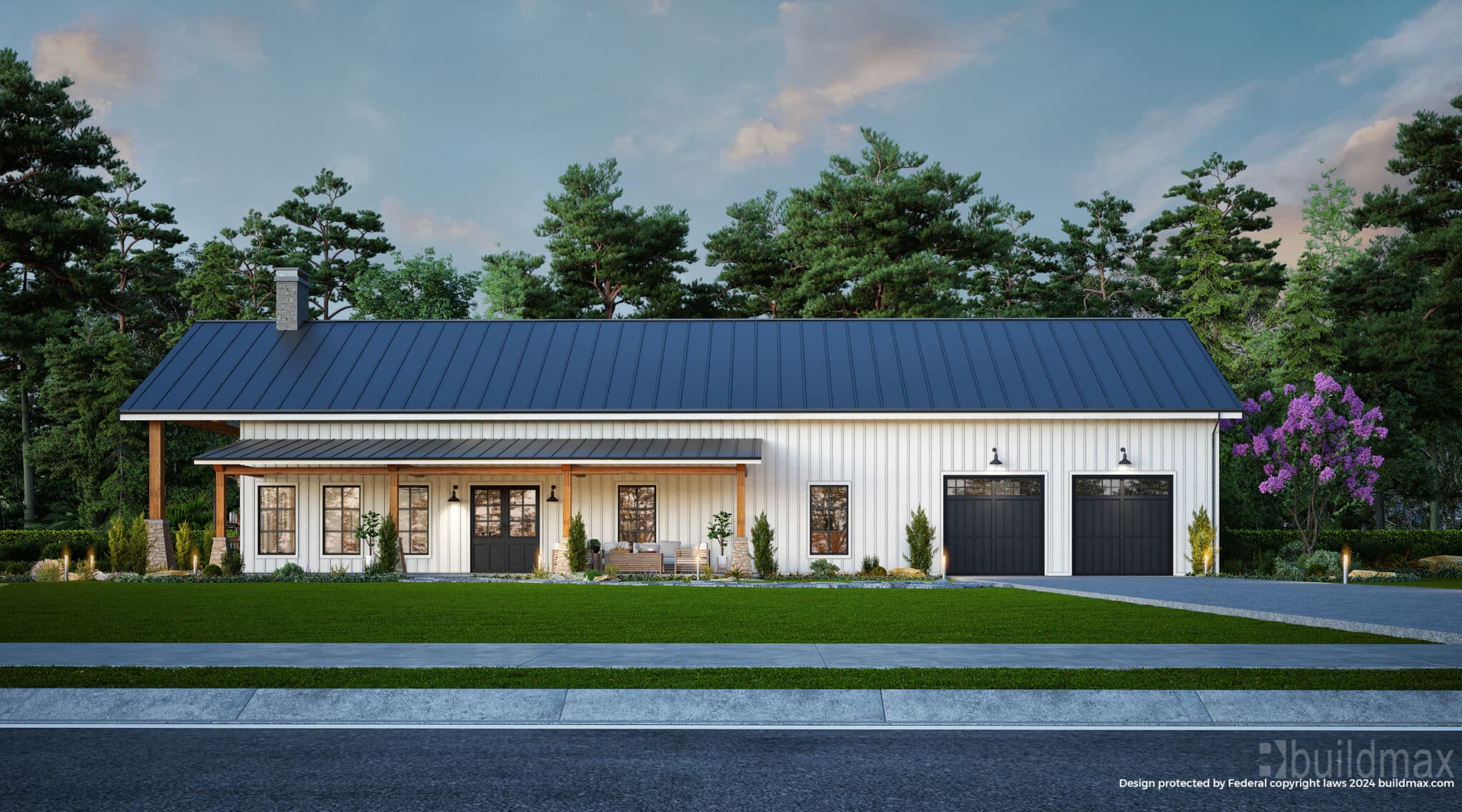
How Big of a Barndominium Can I Build for $200K?
If you are asking how big of a barndominium you can build for $200K, the short answer is: usually somewhere around 1,500 to 2,000 square feet — but only if you are clear about what that budget is actually covering.
That is the part most articles get wrong.
Some buyers are thinking about a shell. Others mean a fully finished move-in-ready home. Those are not the same thing, and they should never be priced like they are.
A $200,000 budget can absolutely build a practical, attractive barndominium in the right situation. But the final size depends on the same things that always control real construction budgets: site work, foundation cost, labor market, finish level, utility setup, and how disciplined the design is.
In this guide, we will break down what size barndominium $200K can realistically buy, what has to go right for that number to work, and what decisions make the size shrink fast.
The Short Answer: How Big of a Barndominium Can You Build for $200K?
A realistic target for a $200K barndominium budget is often around 1,500 to 2,000 square feet, especially if the design is simple, the finish package is practical, and the project is managed carefully.
That is a strong planning range because it usually gives enough room for:
- 2 or 3 bedrooms
- an open kitchen and living area
- a practical primary suite
- laundry or utility space
- a comfortable full-time home without excess square footage
That does not mean every buyer gets 2,000 square feet for $200K. It means that 1,500 to 2,000 square feet is the range where the math starts to make sense for a realistic build.
Why $200K Is a Strong Budget for a Barndominium
$200K is not a “build anything you want” budget, but it is also not a shoestring number.
It is strong enough to move many buyers past the ultra-tight budget conversation and into the range where a barndominium can feel like a real full-time home instead of a compromise-first build.
At this budget, buyers can often start thinking about:
- more comfortable room sizes
- better kitchen and bath function
- a cleaner path to a finished home
- more flexibility than a small-budget build allows
That is why this range matters so much. It is often where a barndominium starts feeling practical instead of squeezed.
What Has to Be True for $200K to Work Well?
A $200K budget goes much farther when a few things are working in your favor.
It works best when:
- the footprint is simple
- the floor plan is efficient
- the finish package is practical, not luxury-heavy
- the site is reasonably buildable
- utility access is straightforward
- you start with a strong stock plan instead of reinventing everything from scratch
That is one reason it helps to start with real plans instead of a vague idea. If you are still defining the build, go to BuildMax Barndominium House Plans first.
What Kind of Barndominium Can $200K Actually Buy?
At this budget, the best fit is usually a mid-sized, efficient barndominium, not a huge custom showpiece.
That usually means:
- a simple rectangular or otherwise efficient footprint
- 1,500 to 2,000 square feet of living space
- modest porch scope
- practical kitchen and bath finishes
- limited design complexity
- strong use of open-concept planning
If the design gets more complicated — larger porches, more roof transitions, upscale windows, custom finish packages, harder site work — the square footage you can afford drops.
Shell Cost vs Finished Cost: Stop Confusing the Two
This is where buyers lose the plot.
Shell cost
A shell budget usually covers the structural package and some part of the exterior envelope. It gets you under roof, not move-in ready.
Finished cost
A finished budget includes the slab, insulation, electrical, plumbing, HVAC, drywall, flooring, cabinets, fixtures, labor, and the rest of the work required to actually live in the building.
The reason this matters is simple: a shell number is not a finished-home number.
If you want to explore the structure-first route, go to BuildMax Barndominium Kits. If you want broader finished-home cost context, go to How Much Does a Barndominium Cost to Build?.
What Usually Shrinks the Size You Can Afford?
If you are aiming for the higher end of the 1,500 to 2,000 square foot range, these are the things that will pull you back down the fastest:
1. Site work
Clearing, grading, driveway access, septic, water, drainage, and utility runs can hit the budget hard before the house itself is even complete.
2. Design complexity
Complicated rooflines, multiple bump-outs, breezeways, oversized porches, and decorative structural details all add cost.
3. Finish upgrades
Luxury kitchens, high-end baths, upgraded windows, stone accents, and designer finishes eat square footage fast.
4. Oversized garages or shop areas
Utility space can be great, but it changes the math if too much of the build is going toward large non-living areas.
5. Weak planning
A stock plan with smart priorities usually wins. A half-custom, half-random wish list usually loses.
What Kind of Buyer Is This Budget Best For?
A $200K budget is often a strong fit for:
- couples building a practical full-time home
- small families needing 2 or 3 bedrooms
- retirees who want space without overbuilding
- buyers who want a real home, not just a shell project
- people who want open living without paying for unnecessary square footage
This is one reason 1,500 to 2,000 square feet is such a valuable planning range. It is big enough to live well in, but not so big that the budget gets out of control immediately.
What Kind of Plan Should You Start With?
If your target is $200K, the smartest move is usually to start with a stock plan that already fits the budget logic instead of forcing a custom dream home into a number that does not support it.
You want a plan that is:
- efficient
- simple to build
- strong on daily function
- light on wasted space
- easy to price clearly
That is why the best next step for most readers is the BuildMax Barndominium House Plans page.
How Does $200K Compare to a $100K Budget?
A $100K budget usually pushes buyers toward something much smaller and more aggressively efficient. A $200K budget changes the conversation because it often moves the project into the range where a full-time home starts to feel much more comfortable and realistic.
If you want that comparison directly, also read What Size Barndominium Can You Build with a $100K Budget?.
So, How Big of a Barndominium Can You Build for $200K?
Here is the cleanest answer:
For a $200K budget, a realistic barndominium size is often around 1,500 to 2,000 square feet, especially if the design is simple, the finish level is practical, and the project is planned honestly.
You may end up smaller if:
- the site is expensive to develop
- the finishes are upgraded heavily
- the design gets more complex
- the scope includes more garage, porch, or shop buildout
You may stay near the top of the range if:
- the site is straightforward
- the plan is efficient
- you start with a strong stock plan
- you keep the build disciplined
Final Thoughts
A $200K budget can build a real, comfortable barndominium, but only if you treat the budget like a real build budget instead of a fantasy number.
That means knowing the difference between shell and finished costs, keeping the design clean, and choosing a plan that fits the budget instead of fighting it.
If you do that, 1,500 to 2,000 square feet is one of the strongest sweet spots in the barndominium market.