


How Big of a Barndominium Can I Build for $300,000?
If you are asking how big of a barndominium you can build for $300,000, the short answer is: usually somewhere around 2,000 to 3,000 square feet, depending on how simple the design is, how upgraded the finishes are, and how much of your budget gets eaten by site work, utilities, and labor.
That is the real answer.
And it is a much better answer than the vague version most articles give.
A $300,000 budget is enough to build a serious barndominium in many markets. It is not unlimited money, but it is strong enough to move beyond the tiny-budget conversation and into the range where a barndominium can feel spacious, comfortable, and fully livable without turning into an oversized custom project.
The key is understanding what that $300K is actually paying for. Some buyers are thinking in shell-only numbers. Others mean a fully finished move-in-ready home. Those are not the same budget conversation, and they should never be treated like they are.
In this guide, we will break down how much square footage $300K can realistically buy, what affects the number the most, what kind of design choices keep you near the upper end of the range, and which BuildMax resources can help you plan the project more accurately.
The Short Answer: How Big of a Barndominium Can You Build for $300K?
A realistic target for a $300,000 barndominium budget is often around 2,000 to 3,000 square feet. That is the same core range already used on the current BuildMax page, and it lines up with BuildMax’s broader cost guidance of roughly $100 to $150 per square foot for many barndominium builds. At that price range, $300K naturally lands in the 2,000-to-3,000-square-foot zone. :contentReference[oaicite:1]{index=1}
That does not mean every buyer gets 3,000 square feet. It means that 2,000 to 3,000 square feet is the right planning range when the design, finish level, and site conditions are kept realistic.
Why $300K Is a Strong Barndominium Budget
$300K is strong enough to give buyers real flexibility.
At this budget level, many people can move beyond the “how small do I have to go?” question and start thinking about a barndominium that feels like a full-time home instead of a stripped-down compromise build.
This budget can often support:
- more living space than a lower-budget build
- 3 or 4 bedrooms in many plan types
- larger open-concept living areas
- more comfortable kitchen and primary suite design
- better finish flexibility
- a cleaner path toward a fully finished move-in-ready home
That is why this price point matters. It is often where the conversation shifts from “Can I build anything?” to “What kind of barndominium makes the most sense for this budget?”
What Has to Be True for $300K to Work Well?
A $300K budget goes much farther when the project is well managed and the design stays disciplined.
It works best when:
- the footprint is simple
- the plan uses space efficiently
- the site is reasonably buildable
- the finish package is balanced instead of luxury-heavy
- you start with a strong stock plan instead of inventing everything from scratch
- you understand the difference between shell cost and finished-home cost
This is exactly why BuildMax’s broader content cluster matters. The main barndominium cost page helps anchor the cost per square foot discussion, while the house plans page helps buyers compare actual plan types before they start forcing dream-home expectations into the wrong budget. :contentReference[oaicite:2]{index=2}
What Kind of Barndominium Can $300K Actually Buy?
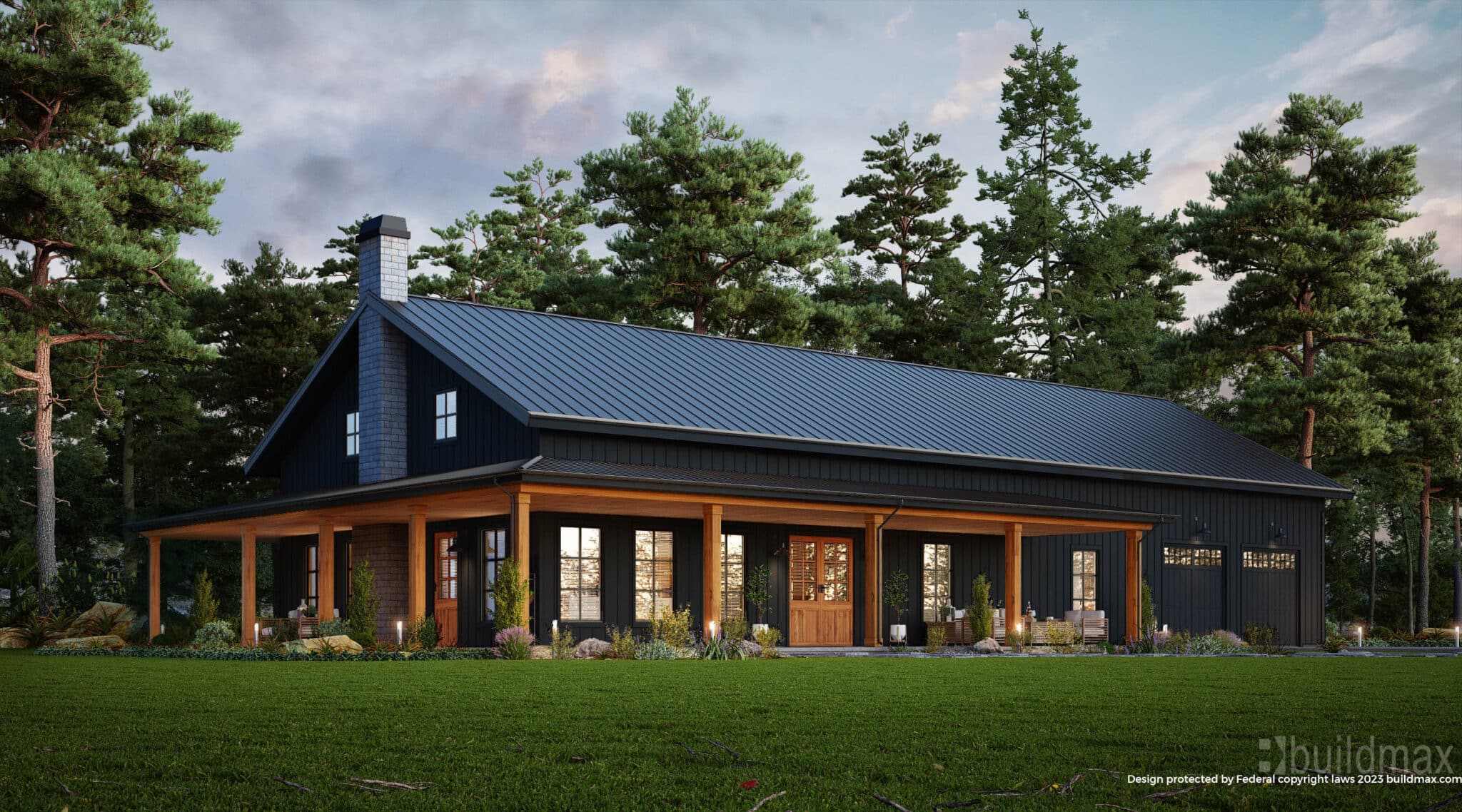
At this budget, the strongest fit is usually a mid-size to larger practical barndominium, not a giant fully customized showpiece loaded with expensive extras.
That usually means:
- a clean rectangular or otherwise efficient footprint
- 2,000 to 3,000 square feet of living space
- an open-concept layout
- a practical kitchen and bath package
- controlled porch and exterior complexity
- a design that stays focused on livability instead of decorative excess
That is where buyers make the biggest mistake. They hear $300K and start designing like they are shopping in an unlimited custom-home category. They are not.
$300K is enough to build well. It is not enough to ignore tradeoffs.
What Pushes the Size Toward 3,000 Square Feet?
If you want to land near the upper end of the 2,000-to-3,000-square-foot range, a few things need to go your way.
Simple design
Rectangular and efficient footprints are easier and cheaper to build than homes with multiple bump-outs, complicated rooflines, breezeways, or heavily customized forms.
Practical finishes
Builder-grade to mid-range finishes make the math work much better than premium kitchens, luxury baths, designer windows, and expensive specialty materials.
Manageable site conditions
If the land is straightforward, utility access is easy, and grading is not a nightmare, more of the budget stays in the house itself.
Strong stock-plan starting point
A stock plan that already fits the budget logic is usually a better move than trying to force a custom dream design into a fixed price ceiling.
What Pulls the Size Back Toward 2,000 Square Feet?
On the other hand, a lot of perfectly normal decisions can shrink the barndominium you can afford.
Higher-end finishes
Upgraded cabinetry, flooring, tile, glass, lighting, and fixtures can burn through square footage quickly.
More complex exterior design
Extra rooflines, larger porches, decorative transitions, and oversized windows all raise the cost.
Site work and utilities
Drainage, grading, septic, driveway work, and utility runs are where budget dreams get dragged back to earth fast.
Oversized shop or garage space
Garage and shop space can be valuable, but it changes how much money is going into finished living area.
Shell Cost vs Finished Cost: Stop Mixing Them Together
This is one of the most important distinctions on the page.
Shell cost
A shell budget usually covers the structural package and some portion of the exterior envelope. It gets you the building shell, not a move-in-ready home.
Finished cost
A finished-home budget includes the slab, insulation, electrical, plumbing, HVAC, drywall, cabinets, flooring, fixtures, labor, site prep, and all the rest of the work required to actually live in the house.
Too many buyers hear a shell number and think they just priced the barndominium. They did not.
If you want to compare the shell side of the equation, go to BuildMax Barndominium Kits. If you want the broader finished-home context, go to How Much Does a Barndominium Cost to Build?. :contentReference[oaicite:3]{index=3}
How Does $300K Compare to a $200K or $100K Build?
This is where the page becomes much more useful than a generic blog post.
A $100K budget usually pushes buyers toward something much smaller and more aggressively efficient, often around the 800 to 1,000 square foot range under the right conditions. A $200K budget often supports something in the 1,500 to 2,000 square foot zone. A $300K budget moves the conversation into the 2,000 to 3,000 square foot range, which is where more spacious family-friendly layouts become realistic. :contentReference[oaicite:4]{index=4}
If you want those comparisons directly, also read:
- What Size Barndominium Can You Build with a $100K Budget?
- How Big of a Barndominium Can I Build for $200K?
What Kind of Buyer Is a $300K Budget Best For?
A $300K barndominium budget is often a strong fit for:
- families who want more room without moving into oversized custom-home territory
- buyers who want 3 or 4 bedrooms and a generous main living area
- retirees who want a comfortable long-term home with better space planning
- buyers who want a more substantial finished home, not just a shell project
- people who want a better balance between style, size, and practicality
It is a very workable budget. It just works best when it is treated like a real plan instead of an emotional number.
What Kind of Plan Should You Start With?
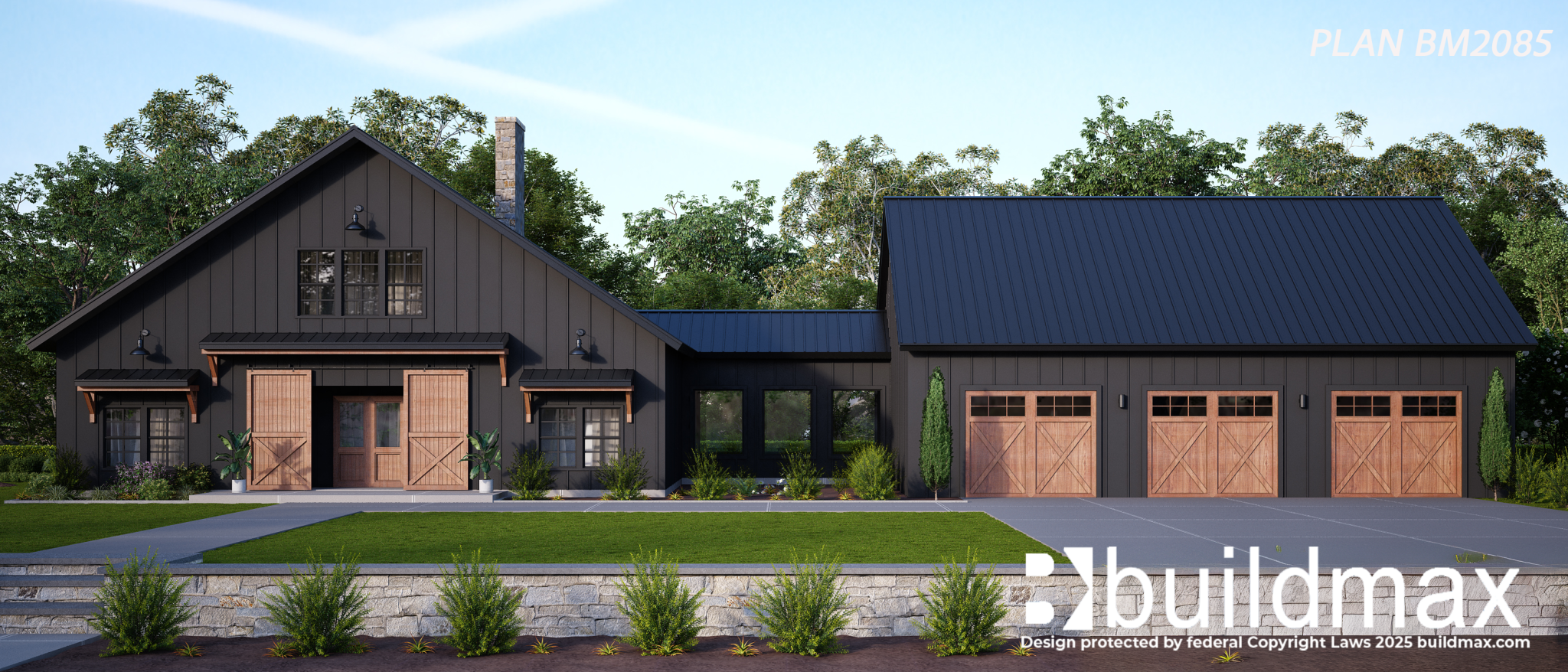
If your budget is around $300K, the smartest move is usually to start with a proven stock plan and then modify it only if you actually need to.
You want a plan that is:
- efficient
- clear to price
- clean in its footprint
- strong on daily function
- not overloaded with unnecessary complexity
That is why the best next step for most readers is BuildMax Barndominium House Plans. The right plan will do more for your budget than almost any other single decision. :contentReference[oaicite:5]{index=5}
How to Get the Most Out of a $300K Budget
If you want the biggest and best barndominium possible at this budget, focus on these decisions:
Keep the design simple
Every roof change, bump-out, oversized porch, and custom detail pushes the square footage you can afford downward.
Choose upgrades carefully
Upgrade the things that improve daily life. Do not upgrade everything just because the budget feels bigger than $200K.
Understand your site early
Land conditions can quietly destroy a good budget if you do not evaluate them honestly.
Use stock plans strategically
Plans that already fit the budget logic will almost always outperform a custom layout that starts bloated.
So, How Big of a Barndominium Can You Build for $300K?
Here is the cleanest answer:
For a $300,000 budget, a realistic barndominium size is usually around 2,000 to 3,000 square feet, especially if the design is straightforward, the finishes are practical, and the site does not create major extra costs. At the lower end of the finish-cost range, you may push toward 3,000 square feet. At the higher end, or with more customization, you may land closer to 2,000 square feet. :contentReference[oaicite:6]{index=6}
The wrong way to use this budget is to assume it buys unlimited customization.
The right way is to treat it like a serious, workable amount of money that can produce a spacious, well-designed barndominium if the project is planned honestly.
Final Thoughts
The old version of this topic was not useless. It just was not sharp enough. It gave the main square-foot answer and then disappeared into generic steel-kit praise.
The better answer is more practical: $300K is enough to build a strong, spacious barndominium, but only if you understand what the money is actually paying for. If you keep the design efficient, the finishes balanced, and the project clearly scoped, this budget can put you in one of the strongest size-and-value ranges in the barndominium market.