




In today’s world, it’s important to have an awareness of our impact on the environment. I think that we all have a responsibility to do our part in lowering our carbon footprint, which can come in many forms. I have friends who quit using plastic bags from the grocery store, downsized their paper waste, and are more conscious of their carbon footprint in daily living. Every little bit can add up to make a big change. So, with the ever-evolving environmental situation we find our world in, it only makes sense to use all of the renewable energy we have at our disposal before we dip into our fossil fuels. We should use fossil fuels as a last resort, although this isn’t how society has done things for many years. Heating and cooling our homes can be done in multiple ways today. Gas furnaces are becoming more appealing, with propane heat and natural gas being popular choices. Electric heating and cooling are probably the most traditional, and many people aren’t even aware that they can save up to 70% on their heating and cooling bill each month, by going with a geothermal heat pump system. These geothermal heat pump systems have been touted as the absolute greenest and most efficient way to heat and cool a home indefinitely, according to the EPA, US Dept of Energy, and many other industry partners.

What is a geothermal heat pump system exactly? Well, they turn out to be pretty neat feats of engineering. Geothermal heat pumps are closed-loop, heating & cooling systems. They do not produce electricity, which makes some people confused by their construction and design. The geothermal heat pump only assists in the heating of water with the help of geothermal properties within the earth, resulting in green, sustainable, naturally produced, pure radiant heat. So, how does this system work?
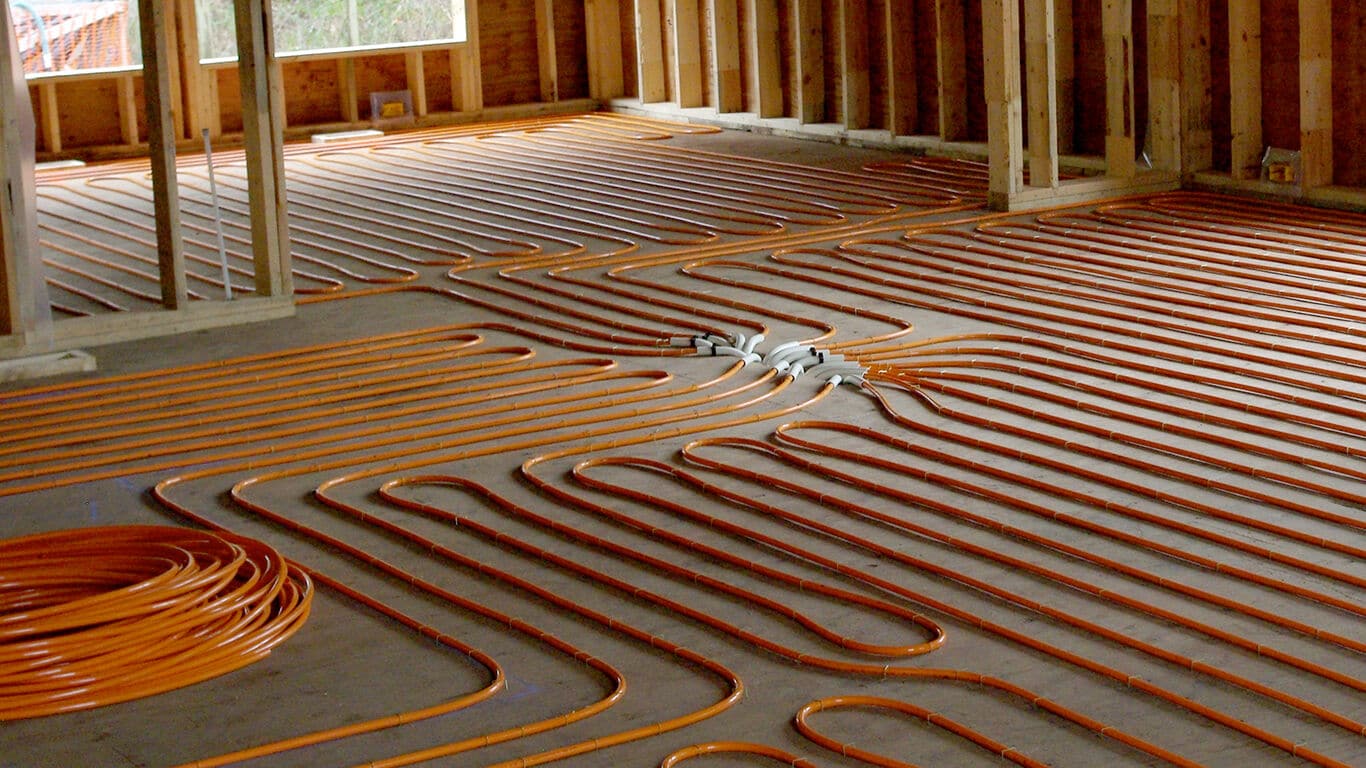
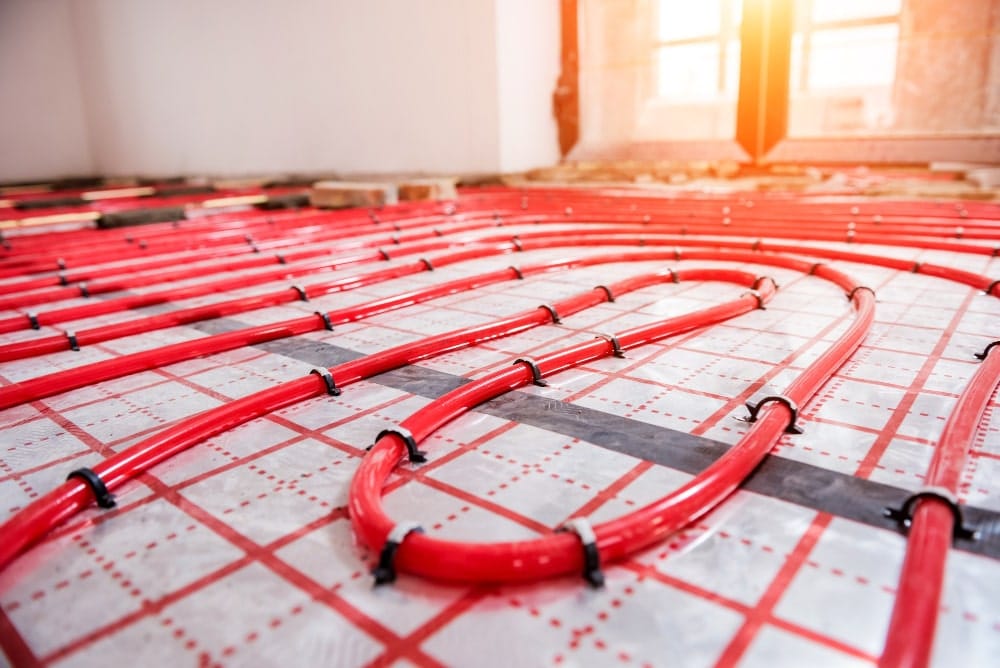
Geothermal heat pump systems come in the form of a machine roughly the size of a small water heater. They vary in size with each manufacturer, but look like something resembling a minifridge, which is then installed in your basement or utility room. The main job of the geothermal heat pump is to pump water through a loop of specialized connected pipes called a heat exchanger, down just below the surface of the earth, where geothermal radiant heat is generated. This method heats the water or water anti-freeze mixture inside the heat exchanger to vaporizing temperatures, all the while the geothermal heat pump is chugging away back in your basement, forcing that heated water back upward into the home, which allows loads of radiant heat to be generated. This example is a very simplified version of how a geothermal heat pump system heats your home. For a more detailed breakdown of the process, I urge you to do your own research. There are tons of great resources online for geothermal heating & cooling options. A nice resource to look into is Waterfurnace.com. They have a very helpful savings calculator on their website to help you determine how much you could actually save by going with a geothermal heating and cooling system versus your current setup. It’s handy to be able to calculate accurately for your barndominium building budget as well.

With a geothermal system being quoted by Google to be 400% more efficient than a traditional furnace, geothermal heating systems actually do run at low speeds to ensure the heat is regulated properly and delivered continuously. No wonder people are switching to renewable energy, right? Some older contractors and builders can be turned off by the high initial startup cost of a geothermal system, and that is an obvious downside, but they aren’t thinking of it as a long-term investment like they should. Look at the investment in green energy solutions like geothermal heating as if you were buying a Tesla vehicle; it might cost a little bit more now, but once you own it, the running cost just makes financial and logical sense. Geothermal heating and cooling systems are no different; they’re a clean, smart choice for a cutting-edge new home build.
Geothermal heating and cooling systems are location-specific. There are some regions and places around the world where it isn’t possible to use geothermal heating and cooling due to the lack of geothermal activity in the area. The geothermal pump system itself has a shelf life of about 20-25 years on average, whereas a traditional furnace is going to get 10- 15 years of potential use, and a central air system is going to come in around 10 years as well. Keep in mind that with the geothermal system, your bill will be a fraction of what the other options will cost you on a monthly basis. Take this with a grain of salt; however, I read an account of a gentleman switching from propane to geothermal, and his bill every month went from around $150 down to $138, saving him on average about $12 a month. That may not sound like a lot, but over the course of the life of a home, it could become quite substantial. If the story is true, this guy was saving $144 per year, that’s a whole $3600 over the course of 25 years. That’s not a bad start, and it’s a green renewable energy source. Below is a comparison of different heating and cooling options and their average cost.
The secret to really going green with a geothermal heating and cooling system is by compounding renewable energy systems together. If you are saving loads of money on your electricity by using solar energy as renewable energy, as well as saving money on heating and cooling with geothermal heating, you are winning in the green energy world. It’s as simple as installing a solar panel system for your home that can act as your primary power supply. When your battery bank runs dry, only then does your home start pulling from the standard power grid, similar to how a generator activates if the power goes out. Think of how much you could save on your electric bill if you were getting most of your power from solar energy AND heating your home with geothermal heat. You might even decide to build a couple of wind turbines up on a hill to generate energy at night when the sun is down. Are you beginning to get the picture of how you could easily live off renewable energy for a fraction of what most people pay for electricity?
Most importantly, is a low carbon footprint that renewable energy provides to fossil fuels. Having a source of energy for your home that pulls heat from the ground, efficiently heating and cooling your barndominium with ease, a system you can be proud of that doesn’t harm the environment or have any kind of negative impact on the earth, is where energy systems are going in the future. The more people start to understand the benefits of renewable energy, the more advanced these systems are becoming. In fact, many European nations have already converted their entire power grids over from traditional energy sources to green energy solutions. Solar, wind, and hydroelectricity are the main sources of energy, and they understand the upside of renewable energy sources; the answer is right there under your feet. Jumpstart your Project by choosing a premium set of Barndominium house plans today to kickstart your very own dream barndominium equipped with state-of-the-art green energy solutions.