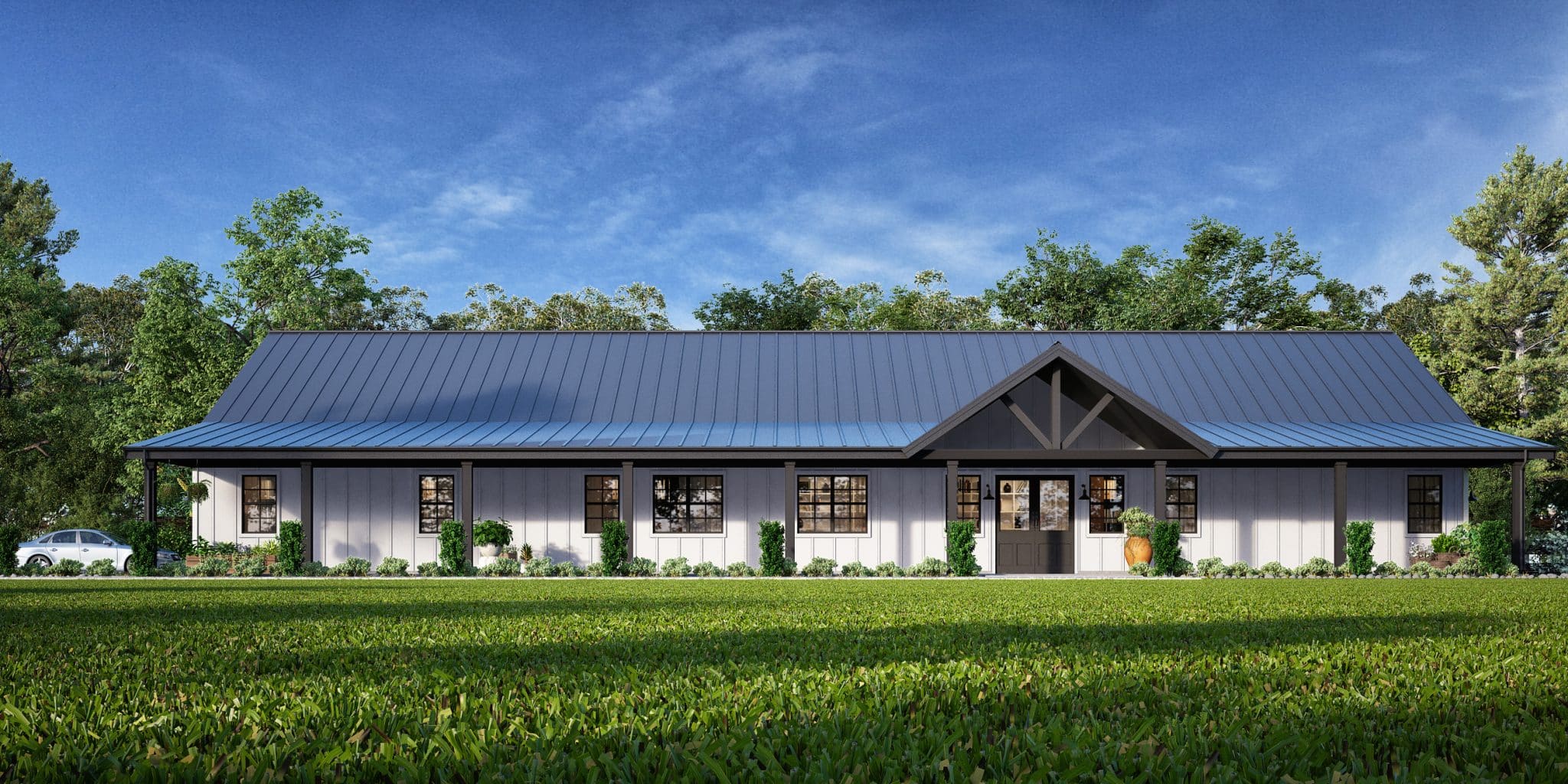



New Mexico
Barndominium Kits
We deliver barndominium kits in New Mexico.
Steel or conventional lumber.
Call for prices on your favorite BuildMax plan
BuildMax offers barndominium kits in both metal building and conventional stick-frame construction, with delivery available throughout New Mexico. If you’re searching for a barndominium builder in New Mexico, we may be able to help connect you with a qualified professional. Already have a builder selected? That’s no problem—our kits are designed to work seamlessly with the builder of your choice.
Homeowners across the country are benefiting from our fast delivery timelines and high-quality building materials. In many cases, your complete building material package can be delivered in as little as 4–6 weeks, a turnaround time that few suppliers can match. BuildMax maintains strong relationships with trusted lumber and steel manufacturers, allowing us to source dependable, premium materials for your homebuilding project.
If you need guidance on building a barndominium in New Mexico and haven’t been able to get answers elsewhere, our team is here to help. We answer our calls—and if we’re assisting another client, we’ll return your call the same day. Contact Devon or Rashannia by phone or email, and they’ll be happy to provide detailed information about our barndominium kits and next steps.
Click below to view our Materials Kit Catalog
New Mexico Barndominium Kits: What Homeowners Should Know Before Building
What Is Included in a New Mexico Barndominium Kit?
Barndominium kits can vary significantly depending on the floor plan, engineering requirements, manufacturer specifications, delivery distance, site conditions, wind exposure, snow-load requirements, seismic considerations, and overall project scope. Some steel-framed barndominium kits may include engineered structural plans, cold-formed steel wall systems, roof trusses, framing components, hardware packages, and related structural materials.
Other New Mexico projects may involve conventional wood framing, post-frame construction, hybrid framing systems, or custom-engineered structural solutions depending on the design, local code requirements, homeowner preferences, and the specific building site.
Before purchasing any building package, New Mexico homeowners should carefully review what materials are included, what materials are excluded, delivery expectations, engineering requirements, jobsite storage responsibilities, installation responsibilities, and any local requirements that may affect the project.
Because New Mexico includes desert land, high-desert acreage, mountain communities, ranch properties, rural counties, wildfire-prone regions, and fast-growing areas near larger cities, it is especially important to confirm zoning, permitting, septic feasibility, well access, water availability, soil conditions, drainage requirements, and local building standards before ordering materials or beginning construction.
New Mexico Climate and Site Conditions Require Careful Planning
New Mexico is a strong state for barndominium construction because of its rural lifestyle, open land, ranching history, mountain views, desert acreage, and demand for practical homes with attached garages, workshops, RV bays, equipment storage, and flexible living space.
A barndominium built near Albuquerque or Las Cruces may have very different requirements than one built near Santa Fe, Taos, Farmington, Roswell, Ruidoso, Silver City, Clovis, Carlsbad, or a remote rural county.
Depending on the location, homeowners may need to plan for intense sun exposure, high winds, dust, monsoon storms, flash-flood drainage, wildfire exposure, seismic considerations, expansive soils, rocky soils, caliche, water availability, septic systems, wells, remote access, and snow loads in higher elevations.
Because of these conditions, New Mexico barndominium projects should be planned with proper engineering, local code review, foundation design, site drainage, insulation strategy, ventilation, roof design, and construction sequencing.
Heat, Sun, Wind, and High-Desert Conditions Matter in New Mexico
New Mexico homeowners should plan carefully for heat, UV exposure, wind, dust, and large temperature swings between day and night. High-desert building sites can be beautiful, but they can also be harsh on exterior materials, roofing, windows, doors, coatings, and mechanical systems if the home is not designed correctly.
Roof design, exterior cladding, window placement, shaded outdoor areas, insulation, air sealing, and HVAC sizing should all be reviewed early in the process.
Open desert and ranch land can expose a barndominium to stronger winds than a sheltered suburban lot. Roof connections, wall bracing, uplift resistance, anchoring, garage doors, exterior doors, and overall structural engineering should be reviewed by qualified professionals.
Steel framing can be a strong option for New Mexico barndominiums because steel systems can be engineered for specific wind, snow, and structural requirements. However, every project still needs to be properly designed, permitted, installed, and inspected according to local building requirements.
Snow Loads and Mountain Conditions May Apply
Although much of New Mexico is known for its desert climate, higher-elevation regions can experience serious winter conditions. Areas near Taos, Angel Fire, Red River, Ruidoso, Cloudcroft, Santa Fe, Los Alamos, Chama, and other mountain communities may require snow-load engineering, frost-depth review, freeze protection, and winter construction planning.
New Mexico homeowners should verify snow-load requirements early in the design process. Roof pitch, truss engineering, overhangs, covered porches, gutters, snow-shedding areas, and protected entryways should all be reviewed with qualified local professionals.
A home in southern New Mexico may have very different design needs than a home in northern New Mexico or a high-elevation mountain community, so site-specific engineering is important.
Monsoon Storms, Flash Flooding, and Drainage Planning Are Important
Drainage planning is one of the most important parts of building a barndominium in New Mexico. Even in dry regions, monsoon storms and sudden rain events can create flash-flood conditions, arroyo flow, wash crossings, erosion, standing water, and access problems.
Before purchasing land or finalizing a plan, homeowners should investigate whether the property can support the home, driveway, septic system, well, drainage plan, foundation design, and required utility access.
Desert acreage may look simple to build on, but grading, drainage, soil conditions, utility access, water availability, and road access can significantly affect the final cost. Properties near arroyos, washes, flood zones, dry creek beds, sloped terrain, or remote rural roads may require additional engineering and site work.
In New Mexico, the land itself can influence the final cost just as much as the barndominium design.
Moisture, Dust, Wind, and Material Protection Matter in New Mexico
New Mexico’s dry climate can be an advantage during construction, but jobsite protection still matters. Wind, dust, sudden rain, standing water, snow in higher elevations, UV exposure, and improper storage conditions can all affect building materials if the project is not properly managed.
Like any construction project, building materials exposed to weather for extended periods may experience moisture-related or environmental issues.
With steel framing systems, prolonged exposure to rain, standing water, snow, jobsite mud, or improper storage conditions may sometimes lead to temporary surface oxidation before the structure is dried-in.
This is why BuildMax strongly recommends proper material storage, weather protection during construction, moving the project toward dry-in as quickly as possible, and using experienced contractors familiar with cold-formed steel framing systems.
Surface oxidation does not automatically indicate structural failure, but proper material management remains critical during construction and long-term ownership.
Proper grading, drainage, flashing, roof design, ventilation, insulation, air sealing, vapor control, dust control, and exterior weatherproofing all play a major role in helping a New Mexico barndominium perform well over time.
New Mexico Building Requirements Can Vary by County and Municipality
Building requirements in New Mexico can vary significantly depending on whether the project is located in a city, county, rural acreage area, desert subdivision, agricultural district, mountain community, wildfire zone, floodplain, high-wind area, historic district, or fast-growing suburban market.
Before starting construction, homeowners should verify zoning, setbacks, septic requirements, well or public water access, sewer availability, electrical service, driveway access, stormwater requirements, foundation requirements, wind-load requirements, snow-load requirements, seismic requirements, floodplain status, and permitting requirements with the local building department.
Engineering requirements may also vary depending on roof design, wind exposure, soil conditions, elevation, frost depth, snow loads, slope conditions, wildfire exposure, and the specific building site.
New Mexico homeowners should also be aware that some areas may have stricter architectural review, HOA requirements, subdivision rules, rural land restrictions, water-rights considerations, historic-area design requirements, county-level requirements, or local design standards.
Most New Mexico barndominium projects move more smoothly when homeowners complete local due diligence before ordering materials or beginning construction.
Water, Septic, Wells, and Utility Access Are Major Considerations
Water availability can be one of the most important issues when building in New Mexico. Rural land may require a well, water hauling, community water access, shared water systems, or other site-specific solutions depending on the county and property.
Before buying land, homeowners should verify water availability, well feasibility, water rights, septic feasibility, power access, driveway access, and whether the property can legally support a residential home.
Remote land may be affordable upfront, but long utility runs, road improvements, septic installation, well drilling, grading, and equipment access can quickly change the total project budget.
In New Mexico, utility planning should happen before the final home design is selected.
Wildfire Planning Is Important in Many New Mexico Areas
Wildfire exposure can be a concern in rural, mountain, foothill, forested, and brush-covered regions of New Mexico. Homeowners may need to consider defensible space, fire-resistant exterior materials, roof coverings, ember-resistant vents, driveway access, water availability, and emergency vehicle access.
Steel framing can be attractive in wildfire-prone areas because steel does not burn like traditional wood framing. However, a steel-framed barndominium is not automatically fireproof. The complete building assembly, exterior materials, roof system, windows, doors, vents, decks, and surrounding property maintenance all matter.
Homeowners building in wildfire-prone areas should discuss local fire requirements early with the building department, fire authority, engineer, and builder.
Proper Insulation, Ventilation, and HVAC Planning Are Critical in New Mexico
New Mexico’s climate makes insulation, air sealing, ventilation, and HVAC planning extremely important. A barndominium in New Mexico should be designed for the local climate zone, whether that means desert heat, high-desert cold, mountain snow, dry air, or large day-to-night temperature swings.
Properly designed systems may include spray foam insulation, batt or blown-in insulation, rigid insulation where appropriate, energy-efficient windows, balanced ventilation, efficient HVAC systems, insulated slabs where needed, shaded glass, and careful air sealing.
In southern and lower-elevation New Mexico, cooling performance, radiant heat control, window placement, and shade are especially important. In northern and higher-elevation New Mexico, heating efficiency, freeze protection, snow management, and insulation levels become more important.
When properly designed and installed, these systems can help improve comfort, reduce energy costs, minimize condensation risk, and support long-term durability.
In New Mexico, poor insulation or ventilation planning can create comfort issues, high cooling costs, drafts, condensation problems, and higher utility bills, so these details should be reviewed with qualified local professionals before construction begins.
Open-Concept Living Works Well in New Mexico
One reason barndominiums continue to attract interest in New Mexico is because homeowners often want flexible floor plans that work well on desert acreage, ranch land, rural property, mountain property, recreational land, family acreage, horse properties, and larger suburban homesites.
Popular New Mexico barndominium features may include open-concept great rooms, large kitchens, walk-in pantries, mudrooms, attached garages, RV bays, workshops, equipment storage, covered patios, shaded porches, outdoor kitchens, home offices, guest suites, gear rooms, and flexible multi-purpose living spaces.
Covered outdoor living areas are especially practical in New Mexico because they provide shade, reduce sun exposure, and help create usable outdoor space in hot, dry climates.
Large shops and RV bays are also popular for homeowners who need space for trailers, boats, campers, ATVs, side-by-sides, motorcycles, tools, ranch equipment, and hobby vehicles.
Builder and Installer Experience Matters
One of the biggest factors affecting the success of any New Mexico barndominium project is the experience level of the construction team.
Not every contractor has experience with barndominiums, cold-formed steel framing systems, New Mexico residential code requirements, wind-load engineering, snow-load design, slab coordination, desert site preparation, drainage planning, septic coordination, well planning, or modern farmhouse-style layouts.
An inexperienced contractor may struggle with slab layout, foundation planning, framing coordination, weatherproofing, insulation details, sequencing, engineering interpretation, permitting requirements, snow-load requirements, moisture control, or specialty installation requirements.
It is important for homeowners to understand that BuildMax is not a licensed general contractor or home builder. BuildMax provides house plans, design services, steel framing packages, and related construction resources.
BuildMax does not supervise construction, control jobsite conditions, or manage independent contractors involved in the building process.
For that reason, BuildMax strongly recommends that homeowners hire a vetted and experienced general contractor, use installers familiar with cold-formed steel framing systems, and carefully evaluate all builders, framers, erectors, and subcontractors before construction begins.
Homeowners may also consider requesting a quote from a third-party manufacturer’s independent steel installation crew if available for New Mexico projects. Installers familiar with the specific framing system may help improve project coordination and reduce installation-related issues.
Although BuildMax may provide general introductions or recommendations to independent contractors or installers in certain areas, all contractors and installers are independent third parties. Homeowners are ultimately responsible for evaluating, selecting, supervising, and contracting with the professionals involved in their project.
Financing and Appraisals Continue to Improve
As barndominiums have become more mainstream, financing options have improved in many areas. However, New Mexico projects may still require additional planning because lenders may evaluate location, utilities, comparable sales, construction method, contractor experience, permitting status, rural access, water availability, land value, and total project cost.
Many lenders are more comfortable with projects that include engineered residential plans, permanent foundations, residential utilities, clear budgets, qualified contractors, and a defined construction scope.
Homeowners who typically experience the smoothest financing process are the ones who finalize plans early, establish realistic budgets, coordinate with lenders upfront, and work with professionals familiar with residential construction lending.
What Does It Cost to Build a Barndominium in New Mexico?
One of the most common questions homeowners ask is:
“How much does it cost to build a barndominium in New Mexico?”
The answer depends heavily on location, site access, wind-load requirements, snow-load requirements, foundation requirements, utility installation, labor availability, finish level, engineering requirements, permitting requirements, soil conditions, and the complexity of the project.
New Mexico costs can vary widely between Albuquerque-area suburbs, Santa Fe-area properties, rural desert counties, high-desert land, mountain areas, ranch properties, and remote acreage.
For planning purposes, many New Mexico barndominium projects may fall approximately between:
$145 to $300+ per square foot
depending on the region, finish level, foundation type, contractor pricing, utility access, site conditions, wind-load requirements, snow-load requirements, wildfire considerations, and project complexity.
High-end Santa Fe-area homes, mountain properties, luxury finishes, oversized garages, large shops, RV bays, complicated rooflines, difficult access, septic systems, wells, long driveways, major grading, utility extensions, wildfire-zone requirements, snow-access improvements, or extensive site preparation may exceed those ranges.
Homeowners should also budget for land costs, clearing, grading, driveways, excavation, septic systems, wells, water systems, public utility connections, foundation work, permits, engineering, freight, equipment access, and site preparation.
Steel framing packages or shell kits are only one portion of the total construction cost. Final pricing depends on the full scope of work and the contractors selected for the project.
Best Areas in New Mexico to Build a Barndominium
New Mexico offers several attractive areas for barndominium living, especially in rural, ranch, desert, mountain, recreational, and acreage-friendly regions where homeowners may want more privacy, shop space, or room for equipment.
Popular areas may include parts of Central New Mexico, Southern New Mexico, Northern New Mexico, rural high-desert counties, and communities outside high-density growth corridors. Areas near Albuquerque-area acreage, Rio Rancho outskirts, Los Lunas, Belen, Moriarty, Edgewood, Santa Fe-area rural communities, Española, Taos, Las Vegas, Las Cruces, Alamogordo, Silver City, Deming, Roswell, Artesia, Carlsbad, Clovis, Portales, Farmington, Aztec, and rural counties throughout the state may appeal to homeowners looking for land and flexible property layouts.
Mountain and recreation areas near Ruidoso, Cloudcroft, Angel Fire, Red River, Chama, Taos, the Jemez Mountains, and northern New Mexico outdoor recreation areas may also appeal to homeowners looking for a full-time residence, retirement home, vacation property, or recreational barndominium. These locations may require more careful review of zoning, septic feasibility, water access, snow loads, wildfire exposure, setbacks, land cost, and local requirements.
The best location depends on zoning, land cost, utility access, permitting requirements, soil conditions, septic feasibility, well availability, driveway access, drainage, snow-load requirements, wind exposure, wildfire risk, and the type of lifestyle the homeowner wants.
Final Thoughts
New Mexico barndominium kits continue to attract attention because they offer flexible floor plans, modern farmhouse curb appeal, garage and workshop integration, covered outdoor living, and highly customizable layouts designed for practical desert, ranch, rural, mountain, and acreage living.
At the same time, successful New Mexico projects require careful planning. Homeowners should consider extreme sun exposure, high winds, dust, drainage, flash-flood risk, monsoon storms, seismic considerations, snow loads in higher elevations, wildfire exposure, water availability, septic feasibility, insulation, ventilation, zoning, site preparation, contractor experience, and local code requirements.
The homeowners who typically experience the best long-term results are the ones who plan carefully, use experienced professionals, protect materials during construction, move the project toward dry-in efficiently, and maintain realistic expectations throughout the building process.
When properly designed, engineered, permitted, and constructed, a New Mexico barndominium can become a beautiful, durable, energy-conscious, and highly functional home built for desert acreage, ranch property, family land, mountain retreats, recreational property, or modern Southwest country living.