



What Is the Most Cost-Effective Type of House to Build?
One of the most common questions homeowners ask when planning a custom home is:
“What’s the cheapest type of house to build?”
The honest answer is: there’s no single cheapest option for every situation. The total cost of building a home depends on a combination of:
-
design simplicity
-
location
-
labor costs
-
site conditions
-
material pricing
-
and construction methods
In many cases, the most cost-effective home is not about choosing one specific style—it’s about designing and managing the project efficiently.
What Actually Impacts Building Costs?
Before comparing home styles, it’s important to understand the biggest cost drivers in residential construction.
These typically include:
-
site preparation and grading
-
foundation work
-
framing and structural systems
-
roofing and exterior finishes
-
plumbing, electrical, and HVAC
-
labor availability
-
permits and inspections
-
interior finishes and upgrades
Because of this, two homes with the same square footage can have dramatically different costs depending on design and location.
Simple Floor Plans Are Usually More Affordable
In general, simpler home designs tend to cost less to build.
Homes with:
-
rectangular layouts
-
standard rooflines
-
fewer corners and angles
-
moderate ceiling heights
are often more efficient than highly customized layouts.
Complex features like:
-
multiple roof peaks
-
curved walls
-
large spans
-
custom structural elements
can significantly increase costs regardless of material type.
Single-Story Homes vs. Multi-Story Homes
Cost differences between one-story and two-story homes depend on the project.
Single-Story Homes
May offer:
-
simpler accessibility
-
easier maintenance
-
straightforward layouts
But they can require:
-
larger foundations
-
more roofing area
Two-Story Homes
May reduce:
-
foundation size
-
roof footprint
But often involve:
-
stair systems
-
more structural engineering
-
additional labor complexity
The “cheaper” option depends on the specific design and land conditions.
Barndominiums and Metal Homes
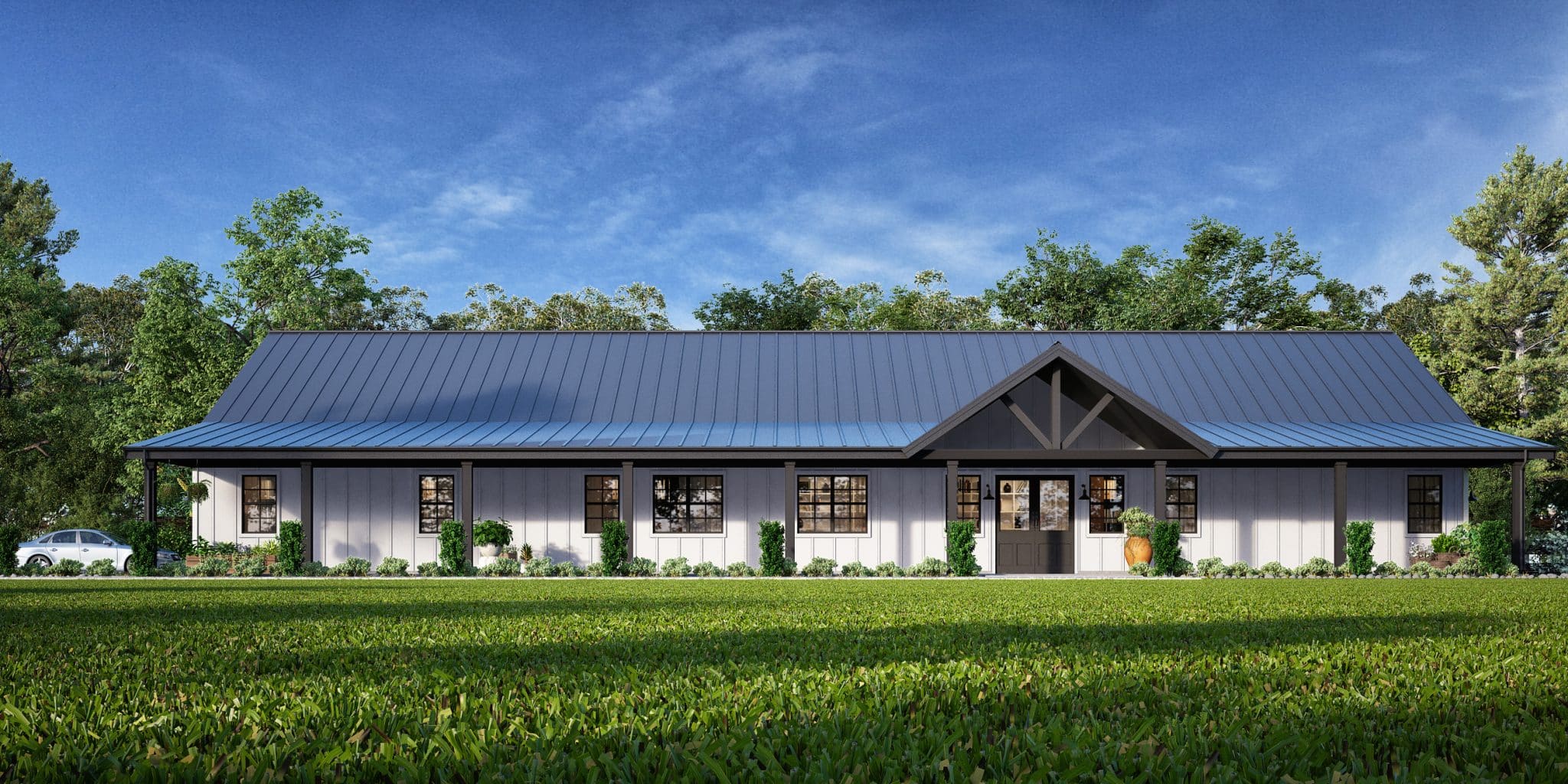
Barndominiums are often marketed as an affordable housing solution because they can feature:
-
open-concept layouts
-
efficient structural systems
-
combined living and garage/shop space
In some situations, they can be cost-competitive—especially with simple layouts and properly planned projects.
However, costs still depend on:
-
labor availability
-
local codes
-
interior finishes
-
and contractor experience
A highly customized barndominium can cost as much as, or more than, a traditional home.
Manufactured and Modular Homes
Some homeowners explore:
-
manufactured homes
-
modular homes
-
prefab systems
These can reduce certain construction costs depending on:
-
transportation
-
site preparation
-
customization level
-
and local regulations
However, pricing and flexibility vary significantly by region and manufacturer.
Material Choice Isn’t the Whole Story
Many people compare:
-
wood framing vs. steel framing
-
metal roofing vs. shingles
-
concrete vs. pier foundations
While materials influence cost, labor and design usually have a bigger impact on the final budget.
A well-designed, efficiently built home often matters more than the specific framing system chosen.
The Cheapest Home to Build Is Often:
✔ Simple in Shape
✔ Efficient in Layout
✔ Built on Easy-to-Develop Land
✔ Designed With Realistic Finishes
✔ Constructed by Experienced Contractors
Projects become more expensive when:
-
plans change mid-build
-
designs become overly complex
-
or contractor coordination is poor
Important: Builder and Construction Responsibility
It’s important to understand that BuildMax is not a builder or general contractor.
BuildMax provides:
-
floor plans
-
design services
-
and material packages
BuildMax does not:
-
supervise construction
-
manage job sites
-
control labor pricing
-
or guarantee construction timelines
For best results, homeowners should:
-
hire a vetted general contractor
-
compare multiple bids
-
and work with professionals experienced in their chosen construction system
You may also consider requesting a quote from a third-party manufacturer’s steel installation crew, if available, for projects involving steel systems.
All contractors and installers are independent third parties, and homeowners are responsible for selecting and managing the project team.
Final Thoughts
So, what is the cheapest type of house to build?
👉 In most cases, it’s:
-
a simple, efficient design
-
built on manageable land
-
with realistic finishes and good planning
There is no universal “cheapest” home style because costs vary by:
-
location
-
labor market
-
materials
-
and design choices
The homeowners who usually save the most money are the ones who:
-
plan carefully
-
avoid unnecessary complexity
-
hire experienced professionals
-
and maintain realistic expectations throughout the project.