



How Much Should You Pay for a Standard 40×60 Shophouse?
If you are asking how much you should pay for a standard 40×60 shophouse, the honest answer is this: it depends on what you mean by standard.
That is where most articles on this topic immediately go off the rails.
Some people mean a shell only. Others mean a finished shophouse with living space, a slab foundation, garage or shop area, utilities, and basic interior finishes. Those are not the same project, so they should never be priced like they are.
A 40×60 shophouse gives you 2,400 square feet under roof, which is why it remains one of the most popular sizes for buyers who want the right mix of living space and functional shop or garage utility. It is big enough to work as a full-time home, a serious hobby property, a workshop house, or a barndominium-style build with room to breathe.
The problem is that too many pricing articles throw out one number and act like they answered the question. They did not. They skipped what actually matters: what is included, what is missing, and what can push the final cost up hard.
In this guide, we will break down what a standard 40×60 shophouse typically costs, what that price should include, what usually drives the number higher, and how to tell whether a quote is realistic or nonsense.
The Short Answer: What Should You Pay for a Standard 40×60 Shophouse?
If you are talking about a basic but reasonably finished 40×60 shophouse with a slab foundation, shell, standard shop area, and roughly 1,200 square feet of finished living space, a realistic target usually lands somewhere in the mid-$100,000 range.
That is why about $155,000 works as a useful benchmark for a standard 40×60 shophouse. It is not a magic number, and it is not a universal quote. It is a realistic planning number for a fairly straightforward build.
That also means this: if someone is promising you a truly finished 40×60 shophouse for dramatically less, you should immediately ask what has been left out.
What Is a 40×60 Shophouse, Exactly?
A 40×60 shophouse is a building with a 2,400-square-foot footprint that combines residential living space with garage, workshop, storage, or utility space. Some are shop-first layouts with a smaller residential core. Others are more home-first, with the shop acting like an oversized attached garage.
This size stays popular because it gives buyers a strong middle ground:
- enough room for a practical full-time residence
- enough space for a real shop or garage area
- a footprint that works well on rural or semi-rural land
- a better balance between livability and utility than many smaller builds
If you want to compare real examples before pricing anything, start with the BuildMax shophouse floor plans page and the broader barndominium house plans collection.
What Should Be Included in the Price of a Standard 40×60 Shophouse?
This is where buyers need to slow down.
When someone quotes the cost of a 40×60 shophouse, the number may or may not include:
- slab or foundation
- shell kit or framing package
- roof and siding
- windows and exterior doors
- interior framing for the living area
- insulation
- electrical and plumbing
- HVAC
- drywall and paint
- cabinetry and flooring
- bathroom and kitchen finishes
- garage or shop buildout
- permits, utilities, and site work
A shell-only quote is not the same thing as a move-in-ready project budget.
If the number sounds low, your first question should not be, “Can I get that deal?” It should be, “What is not included?”
How the Cost of a 40×60 Shophouse Usually Breaks Down
If you want to know whether a quote is reasonable, break the project into the major cost buckets instead of staring at one big total.
1. Slab or foundation
The slab is one of the first major costs and one of the easiest to underestimate. A 40×60 slab can cost real money before the structure even starts going up, especially if the site needs prep, grading, or drainage work.
BuildMax already has related resources on 40×60 slab foundation cost and 40×60 concrete slab cost, and those should be part of the reader journey here.
2. Shell or kit
The shell package is another major chunk of the budget. If you are building from a kit path, this usually includes the core structural package and exterior system components, but not the full finished home.
If you want readers to keep digging, link them into what a 40×60 kit includes.
3. Interior buildout
This is where “standard” starts to separate from “custom.” Interior buildout includes framing, insulation, mechanicals, drywall, flooring, cabinets, baths, lighting, and kitchen finishes.
This is also where people quietly turn a budget-friendly project into a much more expensive one.
4. Site work and utilities
Clearing, grading, drainage, driveway access, septic, water, and power connections can move the budget fast. A simple build on an easy site is one thing. A “simple” build on a difficult site is not simple anymore.
5. Contingency and local cost swings
Material pricing, labor availability, regional building norms, and code requirements all move the number. No article can erase that. What it can do is help readers price more honestly.
Why Some 40×60 Shophouses Cost Way More Than Others
Two 40×60 shophouses can have the same footprint and completely different budgets.
That usually comes down to five things:
Living space vs shop space
A plan with 1,200 square feet of finished residential living area and 1,200 square feet of simpler shop or garage area is very different from a plan trying to finish nearly the entire structure like a traditional custom home.
Finish level
Budget cabinets, standard flooring, and practical fixtures cost far less than premium kitchens, custom tile, upgraded glass, and luxury baths.
Structural complexity
Simple layouts are cheaper to build than designs with complicated rooflines, oversized porches, breezeways, or decorative structural transitions.
Site conditions
Flat, accessible land is cheaper to build on than land with drainage issues, difficult access, utility complications, or major prep needs.
Shop functionality
A basic garage/workshop is one thing. A high-clearance shop with bigger doors, deeper bays, heavier slab needs, or RV/equipment storage is another.
What Makes a 40×60 Shophouse “Standard” Instead of Custom?
This matters because people throw around the word standard way too loosely.
A standard 40×60 shophouse usually means:
- a simple rectangular footprint
- a practical slab foundation
- a modest finish package
- a clear split between living space and shop space
- no major luxury upgrades
- no unusually difficult site conditions
A custom 40×60 shophouse often means:
- more elaborate exterior design
- larger porches or breezeways
- upgraded kitchens and baths
- specialty garage or shop requirements
- heavier structural demands
- modified or fully custom plans
If the buyer is somewhere in the middle, that is usually where a stock plan plus targeted modification makes more sense than starting from scratch.
How Much Living Space Can a 40×60 Shophouse Really Give You?
A 40×60 footprint gives you 2,400 square feet under roof, but that does not mean all 2,400 square feet should become finished living space.
For many buyers, the smarter move is to keep the living side more disciplined. A split like roughly 1,200 square feet of finished residential space and 1,200 square feet of shop or garage utility is often much more believable and much more useful than trying to force the whole footprint into a traditional house layout.
If readers want to understand that size better, send them to How Big Is a 40×60 Barndominium? and Understanding the Size of a 40×60 Barndominium.
What Usually Blows the Budget on a 40×60 Shophouse?
If the goal is cost control, this section matters more than all the feel-good stuff.
1. Oversized residential buildout
The more of the 2,400 square feet you finish as living space, the faster the price climbs.
2. Luxury finishes
Upgrades in kitchens, baths, flooring, lighting, windows, and appliances add up hard and fast.
3. Site development
Land work is where many good budgets go to die.
4. Shop overbuild
Bigger doors, deeper bays, higher wall heights, heavier-use slab needs, and special utility requirements all push the budget upward.
5. Pretending the shell is the total cost
This is still one of the biggest mistakes in the category. The shell is only one phase of the project, not the whole project.
Is a 40×60 Shophouse a Good Value?
For a lot of buyers, yes.
A standard 40×60 shophouse can be a very strong value because it gives you:
- enough living space to be practical
- enough shop space to be useful
- enough footprint to flex around your lifestyle
- not so much square footage that the budget gets stupid immediately
This is why this size keeps showing up in both shophouse and barndominium planning.
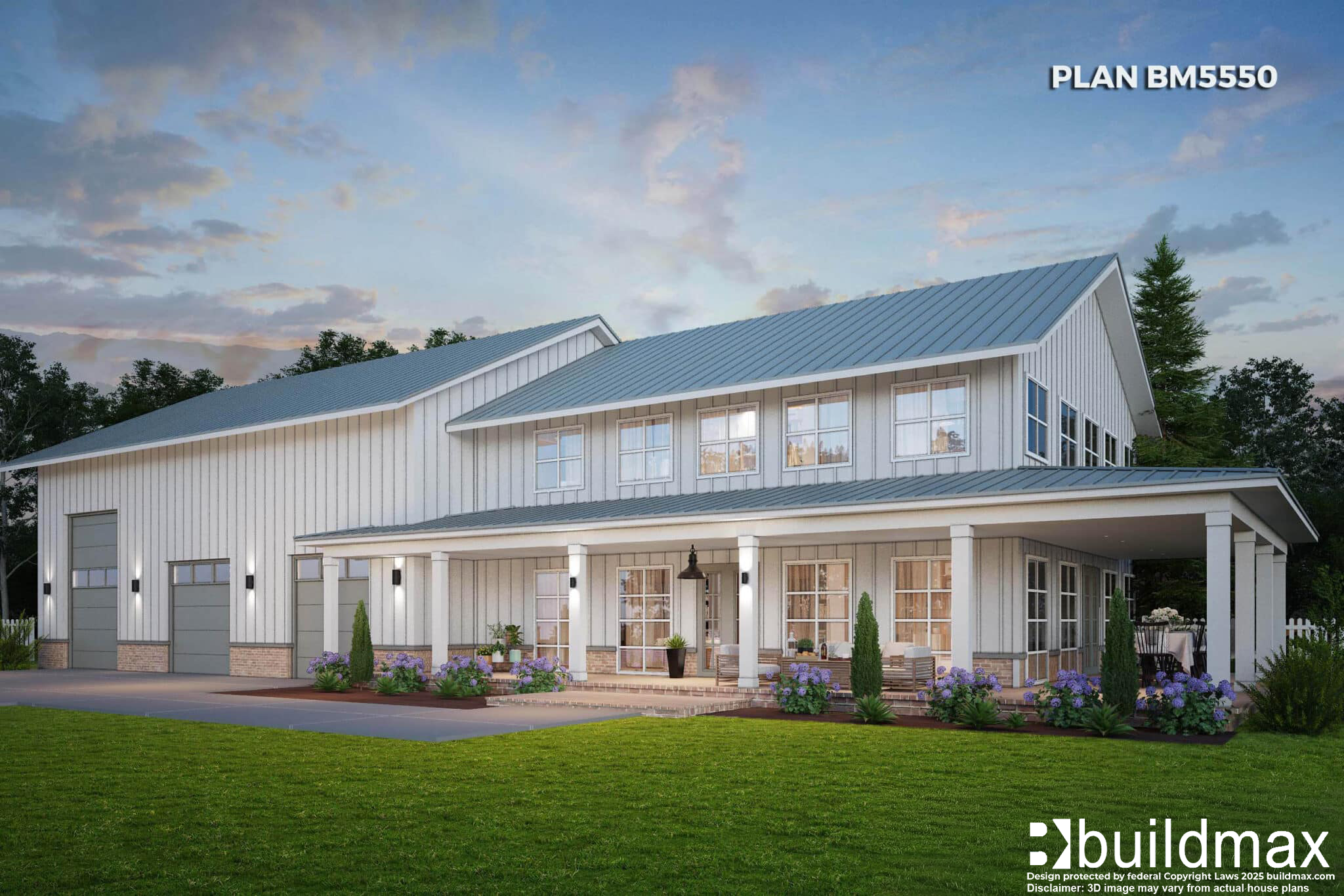
If readers want real examples, point them toward the BuildMax shophouse floor plans, including live plan pages like BM2610 and BM5550.
So, How Much Should You Pay for a Standard 40×60 Shophouse?
Here is the cleanest answer:
If you are pricing a basic standard 40×60 shophouse with a slab foundation, shell, standard shop area, and a reasonably finished living section, you should expect the total price to land somewhere around the mid-$100,000 range, with about $155,000 serving as a strong BuildMax benchmark for a simple reference build.
That number can move lower or higher depending on:
- how much of the structure becomes finished living space
- how elaborate the shop needs to be
- how difficult the site is
- how aggressive the finish package becomes
- how complete the quoted scope really is
The wrong way to price a shophouse is to chase the cheapest shell number and call it the project cost.
The right way is to ask:
- What is included?
- How much living space am I actually finishing?
- What does the slab need to support?
- How hard is the site?
- What finish level am I really expecting?
Final Thoughts
A standard 40×60 shophouse can be one of the smartest mixed-use building sizes for buyers who want real living space and real utility under one roof. But the page should not pretend the answer is one magic number. The answer is understanding what that number actually buys.
If you define the scope clearly, this topic gets easier. If you keep pretending shell cost, finished-home cost, and custom-home cost are the same thing, the math will stay confusing.